How Do We Build a Customer Loyalty Engine That Actually Pays Off?

Loyalty programs don’t tend to create loyalty as much as they just create transactions. And they do it with points, or punch cards, or discounts for returning customers, and so on—which is fine, but these tools don’t solve the problem of “customer loyalty”, because real loyalty doesn’t begin with rewards.
Real loyalty begins with emotional certainty. Customers stay with a business because choosing that business feels easier and less risky than choosing anyone else—especially when life is already complicated, as it is for most people.
Let me give you a personal example:
Each week, I work from the same coffee shop. There are lots of others nearby, and some are even closer to where I live, or trendier. Some have better espresso and food, and at least one has some pretty nice chairs.
This one has a loyalty program, and even though I’m a regular there, I’m not a member. Because it’s not the reason I go to this coffee shop. I go because I know exactly what will happen when I walk in: they will recognize me and will remember my order. The environment feels calm and predictable; there’s no decision to make, and that’s the point. Loyalty should make things easier.
Lots of businesses miss this because they confuse repeat behavior with emotional commitment.
They wonder how to get a customer to come back—when the better thing to ask is, how do we make customers stop weighing out why they should stick with us or go somewhere else?
This is where a business loses the customer’s loyalty: every time a customer wonders something like, “Should I check another option?”, or “Will this be a hassle again,” or “Will it feel different this time?”
If a customer is really loyal to you, those questions go out the window. You build loyalty like that by being consistent: consistent in how you handle problems for the customer, in how customers are treated under pressure, and in how predictable the experience feels, even when something goes wrong. Because people are loyal to who they trust.
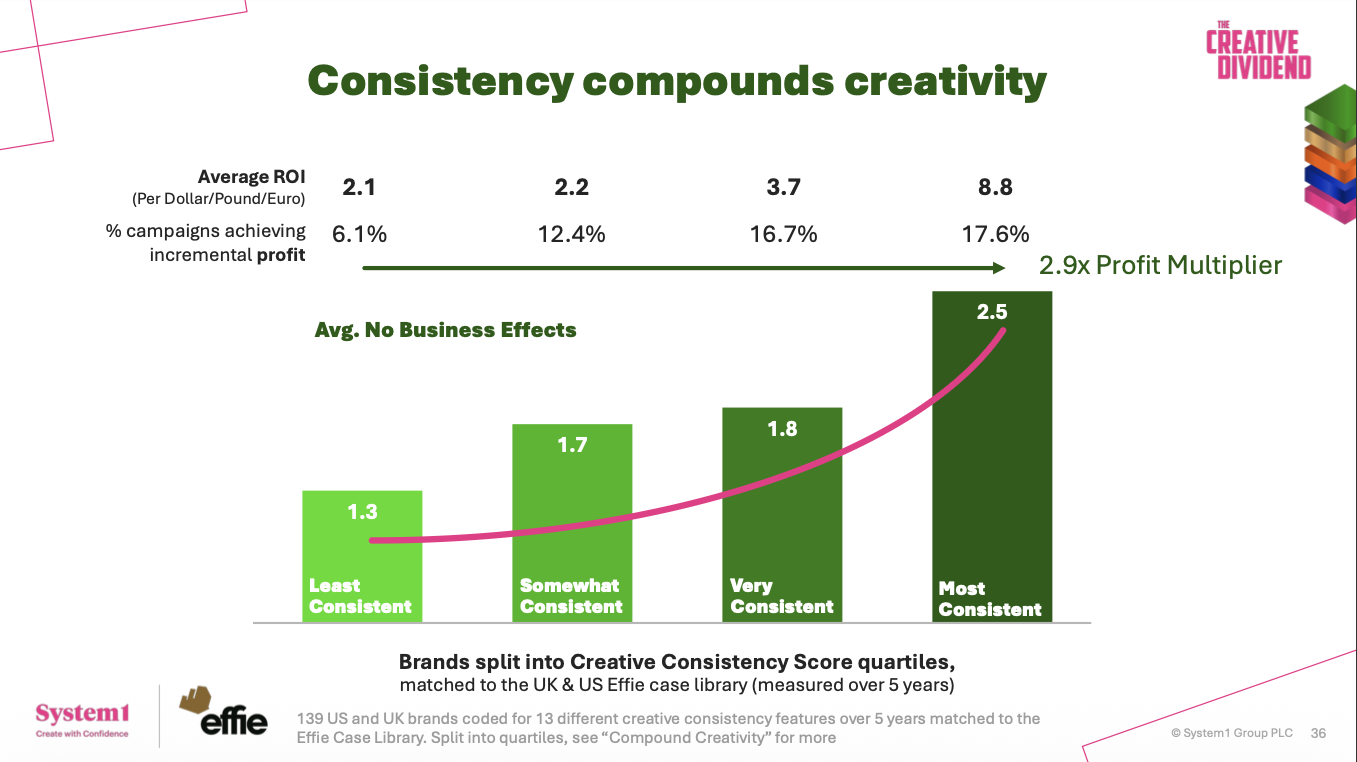
Businesses that stay consistent in how they show up — in their advertising and their experience — generate 8.8x the return of businesses that keep changing their approach, according to research across 139 companies over five years.
And trust like that lowers the mental load for the customer. When customers don’t have to evaluate, compare, or brace themselves for some minor or major inconvenience as a result of going with your business, it becomes their default choice because of its safety.
This is where loyalty begins to pay off financially. Loyal customers are more forgiving when mistakes happen; they’re less sensitive to price increases; they’re quicker to say yes and slower to leave. And that’s because certainty has value. They know how it feels to work with you: they know what kind of experience they’ll get, and they know they won’t regret the decision. This relationship between trust and profit is well researched and well supported:
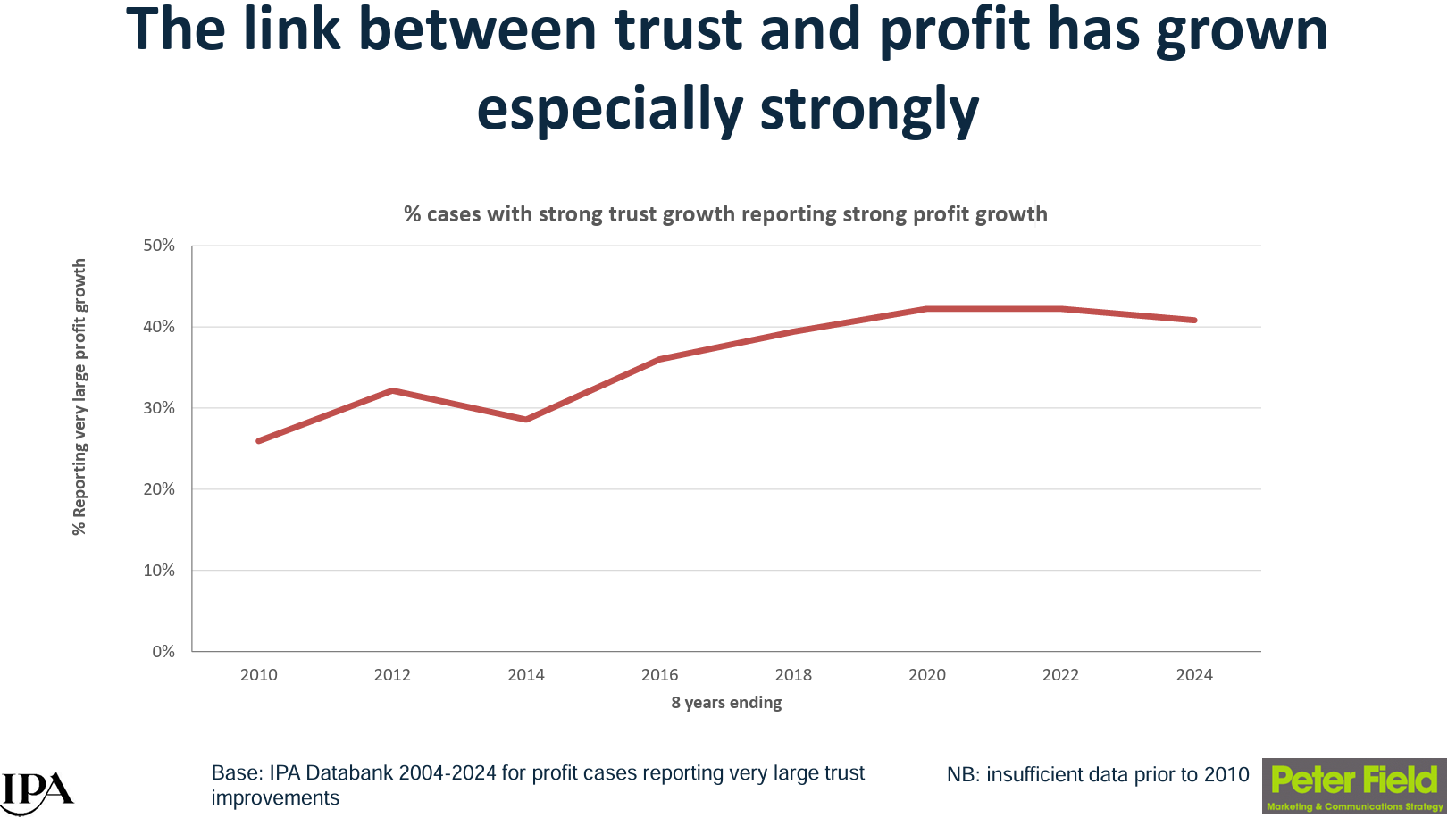
Businesses that build genuine trust are increasingly more likely to report strong profit growth — a trend that has strengthened every year since 2010, according to IPA research tracking hundreds of real campaigns.
That emotional certainty is what most businesses are unknowingly selling, and you probably don’t need me to tell you that it’s fragile. It can be damaged or broken with just one bad experience or response, or just one moment when a customer feels like “just another transaction.”
Which is why building loyalty is about removing friction. If you want to build a loyalty engine that actually pays off, stop asking, “How do we keep them coming back?” and start asking, “How do we remove reasons to reconsider us?”
That usually means things like predictable quality, calm and respectful communication (especially when things might be going wrong), a willingness to fix company mistakes cleanly without excuses or defensiveness, and recognizing people without turning it into a performance.
When loyalty is real, the business itself becomes the habit, and customers come back because they feel known. When customers feel known, they don’t want to start over somewhere else.
True loyalty removes doubt.
Increasing customer loyalty is vital to the growth of any business. Want to reach your growth goals faster?
I treasure entrepreneurs who are truly committed to the undertaking. Since you invested the time to finish this to the end, I want to meet that with some attention of my own.
I usually offer a deep 2-hour 1:1 deep coaching session for $1k but will give you the session for free as a reader of this article. Book your Coaching Call here.