How Should I Plan for Growth Despite Economic Uncertainty?
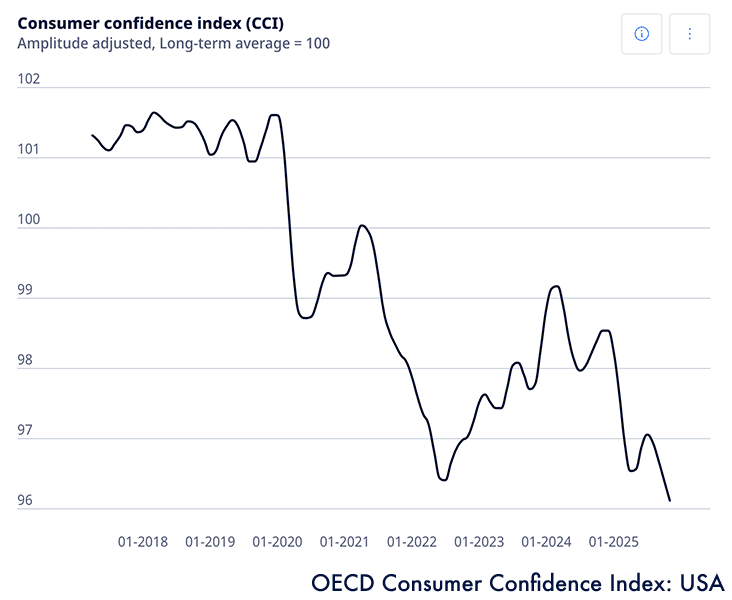
Uncertainty does a dangerous thing to business owners: it stops them from thinking clearly.
Hey, who can’t relate? Inflation and policy changes, interest rates, the sudden resurgence of tariffs, rising costs from all corners—this all builds into a background buzz of anxiety that can make planning feel a little pointless, uncertain as the future seems.
Consequently, business owners might freeze up or even flail around, not sure of what strategy they should deploy. Either way, the result is patently not good growth.
The Effects of Market Uncertainty
Market uncertainty changes behavior in both customers and business owners. Customers become more hesitant, researching their options more and waiting longer, and understandably so—they don’t want to do something they’ll regret later.
Business owners sometimes misread this moment, though, thinking that hesitation means shrinking opportunities to sell, when it really just means that the customer is relying on their trust in the business to make their decision more than being propelled by feelings of urgency.
It’s an important distinction, and I’d like to shine a spotlight on it. Businesses that sell based on urgency struggle in an uncertain market, but businesses that sell based on customer trust are better-able to keep their balance.
A Common Planning Mistake
Business owners try to predict the future when it begins to feel unstable with questions like, what’s the economy going to do, and will rates come down? They try to use data to figure out what customers might spend in the next quarter.
Questions like these feel responsible, but they’re unfortunately mostly unanswerable. You can’t plan based on predictions, because predictions aren’t always very accurate. Better to plan by having 1) clear priorities, and 2) flexible responses.
My team has spoken with multiple business owners who didn’t bother to make a perfect forecast of the economy, and instead just committed to message and pricing consistency.
While some of their competitors reacted emotionally by cutting prices and changing offers, these businesses looked more solid and calm. That becomes a signal—and believe me, customers want to go for it.
Business Owners: What’s Really In Your Hands, Even Now?
You can’t control inflation, policy, global markets, tariffs, and so on, but you can control who you serve, what you stand for, how you communicate, and how you present your presence.
Uncertain markets reward businesses that reduce decision friction. When customers feel unsure, they gravitate toward what feels familiar and stable. You build a feeling of “familiar and stable” by building a consistent identity.
Planning Through Uncertainty For Smart Business Owners
At the moment, good planning comes down to what investors call scenario discipline.
Instead of one rigid plan, strong owners build:
a conservative baseline
an optimistic stretch
and a clear path between these two.
They ask things like, if the business goes slow, what do I keep as a non-negotiable? And if the business picks back up, what do we start to emphasize first? These are flexible possible-directions built on cool calculations.
How to Invest When the Future Is Unclear
Uncertainty in the market might make an owner feel inclined to cut their long-term investments, but that’s pretty often the opposite of what you should be doing.
This is the moment to:
protect your margins before you go after increasing volume
keep your business visible even when leads start to disappear
avoid marketing that stops and starts in different forms, as this erases customer memories of you
remind the public of who you are, and why you exist
Whatever you do, don’t go silent. Silence in an uncertain market makes people forget who you are. A business than can stay present with calmness and consistency will be remembered when customers finally decide to move forward on a purchase.
A Plan For Planning
In the context of market uncertainty, instead of trying to plan years out, focus on 1) 90-day priorities, 2) weekly leading indicators, and 3) only a small number of meaningful metrics. A plan shouldn’t stress you out; it should make things feel easier!
A Final Thought
In uncertain times, growth still occurs, but a different kind of company will be the one doing the growing. Businesses that seem to the public to be reacting to the market can make the public doubt them, while businesses that seem to be set on steaming ahead with no major course corrections can be a source of comfort for the consumer.
In the end, you don’t need market certainty to grow as much as you need a clear image to the public and consistent leadership. Not to mention the discipline to stick to your plan when other companies are starting to panic.
If you want to know what’s feasible in your market and guidance planning your future growth, you can book time on my calendar and I’ll be happy to assist.