
"Our Customers Are Happy, So How Do We Lose to Companies With Worse Service?"
So you've built a company that delivers genuinely superior service, but the phone somehow rings less than it should. That’s because the battle for the customer was lost far before they needed to make a call.
Service companies often obsess over what happens when the phone rings: they train their people on how to act, and they try to perfect their scripts and the follow-up.
Which is not a bad thing, of course; those are all, in fact, really important. But none of it will matter if the phone doesn't ring.
The phone call is the finish line. The race started months — sometimes years — before that moment. It started the first time a homeowner heard a name, saw a truck, or caught an ad while half-listening to the radio on the way to work.
You've been perfecting the last ten feet of a mile-long race. Meanwhile, your competitors own the first 5,270 feet.
They Go For Your Competitor First Because They See Them More
When a pipe bursts at 11 p.m. on a Tuesday, the homeowner doesn't open a spreadsheet and compare service records or read reviews; she doesn't ask herself who truly provides the highest quality workmanship in her area. She just takes her phone and calls whichever name floats to the top of her mind.
And that’s all; there are no other decisions apart from that.
The company she already knows is just going to beat out the company that's actually better, every time. That’s reality, unfortunately. When people need something urgently, they go for whatever might be familiar, and call a name that feels safe.
Your competitor with the worse service has been putting their name in that homeowner's head for years. They've been on the radio every week; she sees their trucks everywhere, and their ads told stories she actually remembered. (Article: Being Remembered.)
So when she had a crisis, their name sprang immediately to mind instead of yours.
Why "Word of Mouth" Isn't Saving You the Way You Think It Is
I know what you're thinking. "But our customers love us. They tell their friends."
They do; we believe you.
But think about it like this: your happy customer tells two or three friends over the course of a week, and then stops. That’s great, but your competitor's advertising speaks to two or three thousand strangers a week, every week. Those strangers don't need a plumber or an HVAC tech now, but they probably will eventually — and when they do, they might not remember your customer's recommendation from a backyard barbecue eighteen months ago. Instead, they'll likely remember the name they've heard a hundred times since.
Word of mouth is a whisper. A good ad campaign on consistent mass media is a drumbeat. The drumbeat doesn't have to be louder than the whisper. It just has to be more relentless.
At any given time, only about 7% (seven!) of your trade area actually needs what you’re selling right now, and word of mouth can only reach a tiny slice of that tiny slice. Advertising, though, reaches the other 93%. These people will need you someday, but don't know your name yet.
Become Who They Think Of Before They Need You
What must one do to fix this?
First of all, you should probably stop spending all your money pursuing the small pool of people searching Google. Relatedly, here’s an article on why SEO has become something of a scam; it only rents attention. Have you seen the price of clicks lately? These things are only getting more expensive every year — home service companies were paying nearly eight bucks a click in 2025, and the number is only going up.
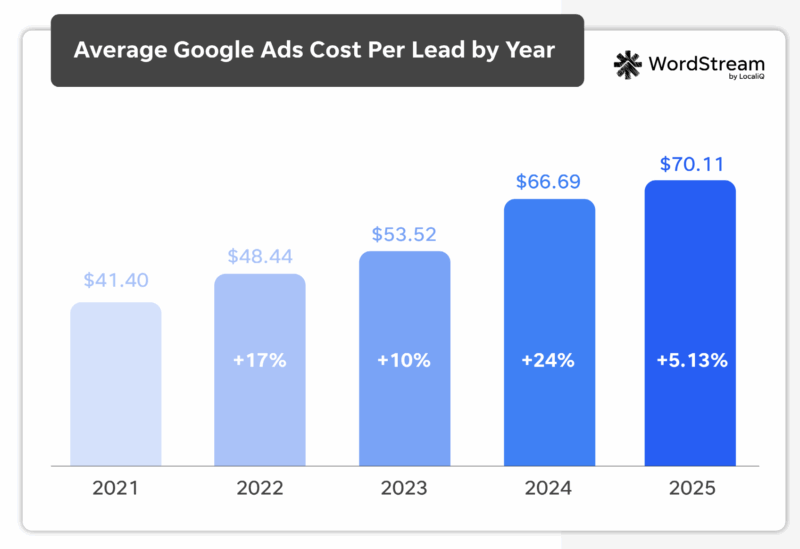
Instead, you should invest in making your name familiar to people who don't need you yet.
This is the work of consistent, long-term branding, and nothing else will do. You need to make a 52-week commitment to appearing in the eyes and ears of your future customers with a message they'll remember.
This means you’ll have to say something worth remembering. Most ads aren't written to persuade — they're just written not to offend. We understand that, but this approach makes them so safe and boring that they disappear immediately after they're heard. Your ads need to tell a story; they need to make someone feel something. Entertainment is the price we pay for a stranger's attention, and we must pay it gladly.
The longer you run this kind of advertising, the better it works, but on the other han, the longer you run discount-and-deal ads, the worse they work. One compounds while the other decays. (Article: Brand Before Activation.)
Invest Wisely
Don’t try so hard to perfect what happens after the phone rings, but instead, try to invest in being the name that makes it ring in the first place.
Your service is your product, and your brand is what puts it in front of people. Without the second, the first never gets its chance to shine.