Why Am I Spending More on Marketing Than I Did Two Years Ago but Getting Fewer Leads?
Your budget went up, but somehow your leads went down. Every ad provider has a different excuse for why, but the real problem is almost never that you're spending too little.
Let's talk about what's actually happening.
A lot of business owners think spending more means reaching more people, but unfortunately, it doesn’t mean that these days — and possibly never will again.
The cost of a Google click in your industry has gone up roughly 13% in just the last year — and that's on top of the year before that, and the year before that. It’s been five straight years of rising costs. So you're paying more just to stand in the same spot.
While this has been happening, your audience has become even more fragmented than it used to be, using more different apps and screens than ever. The money with which you once got the attention of a large crowd now only gets the attention of a handful, and inflation and fragmentation have destroyed your budget — so to make matters worse, you’re having to put more effort into keeping the same position in more places than just Google.
Don’t Forget That Your Ads Can Go Stale
Though we strongly emphasize the importance of consistency and sticking to the same ad campaign in the short term, over the longer term an ad can eventually wear out: the words and the message can become a bit trite or invisible in the minds of your audience.
People don't hate ads, but they do hate boring, predictable ads. And an ad that felt sharp 3 months ago can feel invisible now.
No amount of money fixes a message people have trained themselves to ignore. You can turn up the volume on a boring song all you want, but nobody's going to enjoy it.
Memory Is More Important Than Clicks
At some point you probably moved more of your budget toward things you could track, but the problem with doing this is that it can make you start harvesting demand you that stop planting for. (Article: Brand Before Activation.)
All those trackable clicks mostly catch people who were already looking for what you sell. You were picking the low-hanging fruit — fruit that grew because of the reputation and awareness you'd built over the years.
When you stopped planting — stopped putting your name and your story in front of people before they needed you — the fruit stopped growing. Now you're reaching into the tree and finding bare branches.
The data from the IPA, in one of the largest studies of ad effectiveness ever done, shows that campaigns focused only on short-term clicks actually produce negative long-term profit effects. But campaigns that build the brand compound over time, and can become more efficient with each passing year they run.
When you trade long-term growth for short-term comfort, the bill will eventually come due. (Article: Short-Term Pressure.)
Fix the Ratio
Try to think about the percentage of your budget aimed at future demand versus today's clicks. You really don’t want almost all of it to be going toward clicks.
Research says the ideal is about 60% of your budget given over to making people know who you are and like you (as well as trust you) before they need you, and 40% toward giving them a timely reason to call when they're ready.
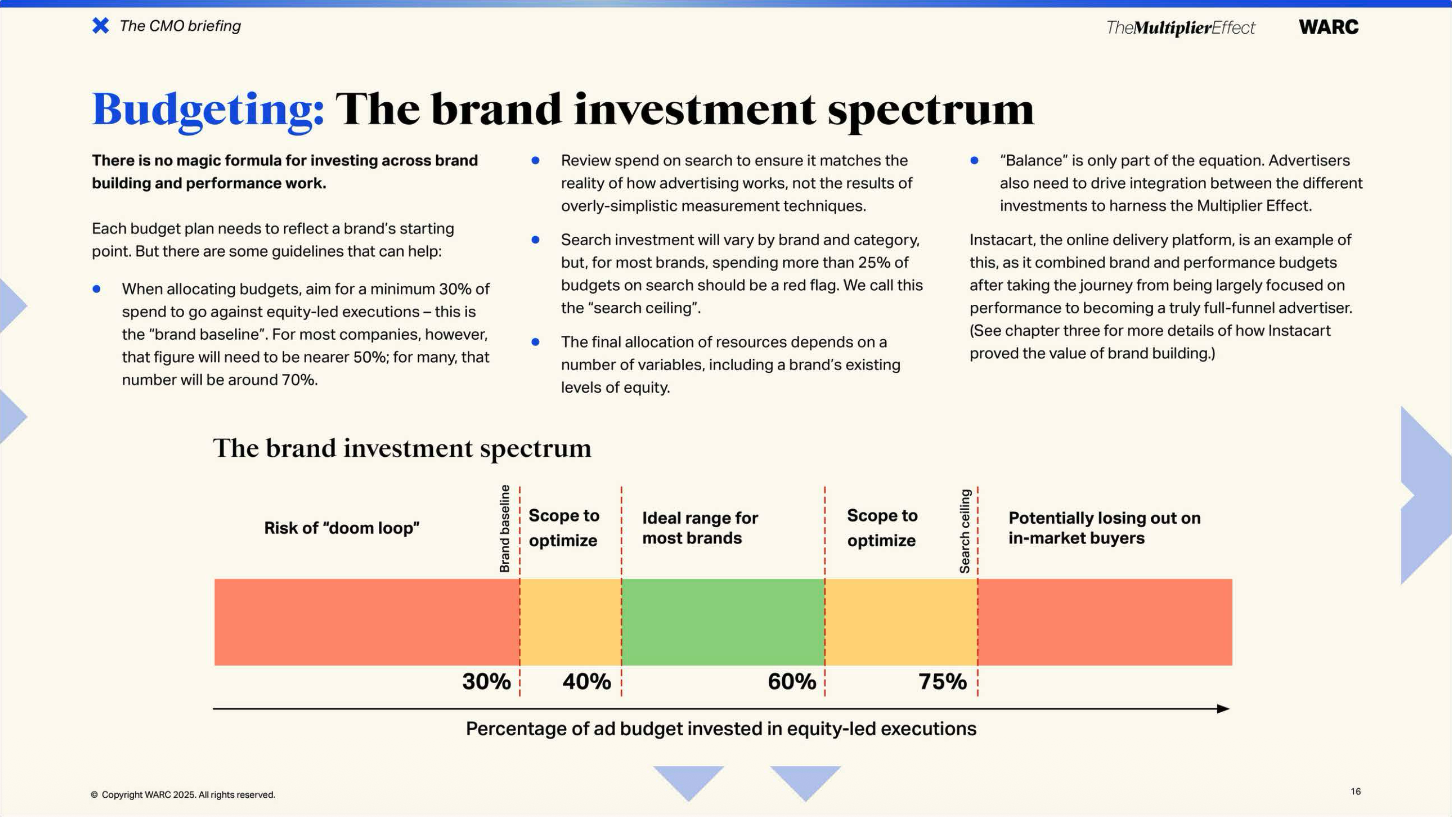
The 60% is the planting, and the 40% is the harvest; you need both.
What makes this work is a strong message in the right combination of media; this gets cheaper and more effective every year you run it. The data shows that brands using this approach start slower but overtake the guys just going after clicks by around the sixth month, then pull dramatically ahead by the end of year two.
A great message on television or radio that sticks in the heads of your target audience will plant seeds that might bear fruit in six months or even years from now. When their furnace dies or their pipes burst, they’ll think of you, and they might not even really know why.
That's what you're really buying: a place in someone's memory.
Closing Thoughts
It would be better to stop asking how to get more leads from more spending. Instead, try to start asking whether your message is worth remembering in the first place.
In the end, a message that people can't forget (which is delivered week after week in media that can really reach them) is what makes a budget work harder over time. Everything else is just renting attention, and rented attention has to be paid for repeatedly.